

1. Introduction & The Sacred Lineage of Abo Tani
The Tanyi (or Tani) language group constitutes one of the most culturally vibrant and demographically substantial indigenous ethno-linguistic families in Arunachal Pradesh and the Upper Brahmaputra valley. United by a shared cosmological belief in their common mythical ancestor, Abo Tani, these communities share deep ancestral bonds, agricultural ceremonies, and rich oral traditions passed down unbroken across millennia.
Geographically sprawling across the lush river basins of the Kameng, Subansiri, and Siang rivers, the Tani-speaking groups have preserved intricate systems of social philosophy, environmental stewardship, and ritual chanting.
"Language is not merely a tool for communication among our elders; it is the living vessel carrying our ritual chants, the lineage of Abo Tani, and the spiritual memory of our ancestors."
2. The Major Tani Tribes & Dialectal Landscape
While sharing a common genetic and linguistic root within the Tibeto-Burman family, the Tani community comprises distinct major tribes, each with unique dialectal characteristics, phonological subtleties, and regional expressions:
- Tagin (Upper Subansiri & West Siang): Known for their historical settlements in Daporijo, Taliha, Dumporijo, and Siyum. Tagin speech exhibits rich tonal inflections, distinct verbal aspect markers, and ancient ritual chants (Nyibu Agom).
- Nyishi (Papum Pare, East Kameng, Lower/Upper Subansiri, Kra Daadi, Kurung Kumey): The largest ethnic group in Arunachal Pradesh. Nyishi dialects encompass subtle regional variations from Seppa and Koloriang to Yazali and Itanagar, rich in agricultural vocabulary and epic ballads (Nyemba).
- Galo (West Siang, Lepa Rada, Lower Siang): Renowned for their genealogical naming system (where the last syllable of a father's name becomes the first of his child) and sacred oral poetry known as Kaba. Galo speech is particularly noted for its structured tonal patterns and compound verbal morphology.
- Apatani (Tanw / Ziro Valley): Residing in the unique plateau of Ziro, the Apatani language (Tanw Agom) possesses phonological traits shaped by centuries of self-contained valley agriculture and elaborate community councils (Bulyang).
- Adi (East Siang, Upper Siang, Siang): Comprising subgroups such as Minyong, Padam, Shimong, and Pasi. Their oral literature, known as Aabang, records extensive cosmogonies, migration histories, and legal discourses (Kebang).
- Mising (Brahmaputra Valley & Foothills): Sharing immediate linguistic kinship with Adi and other Tani groups, Mising speakers maintain an extensive repertoire of folk songs (Oi Nitom) that mirror the riverine ecosystem.
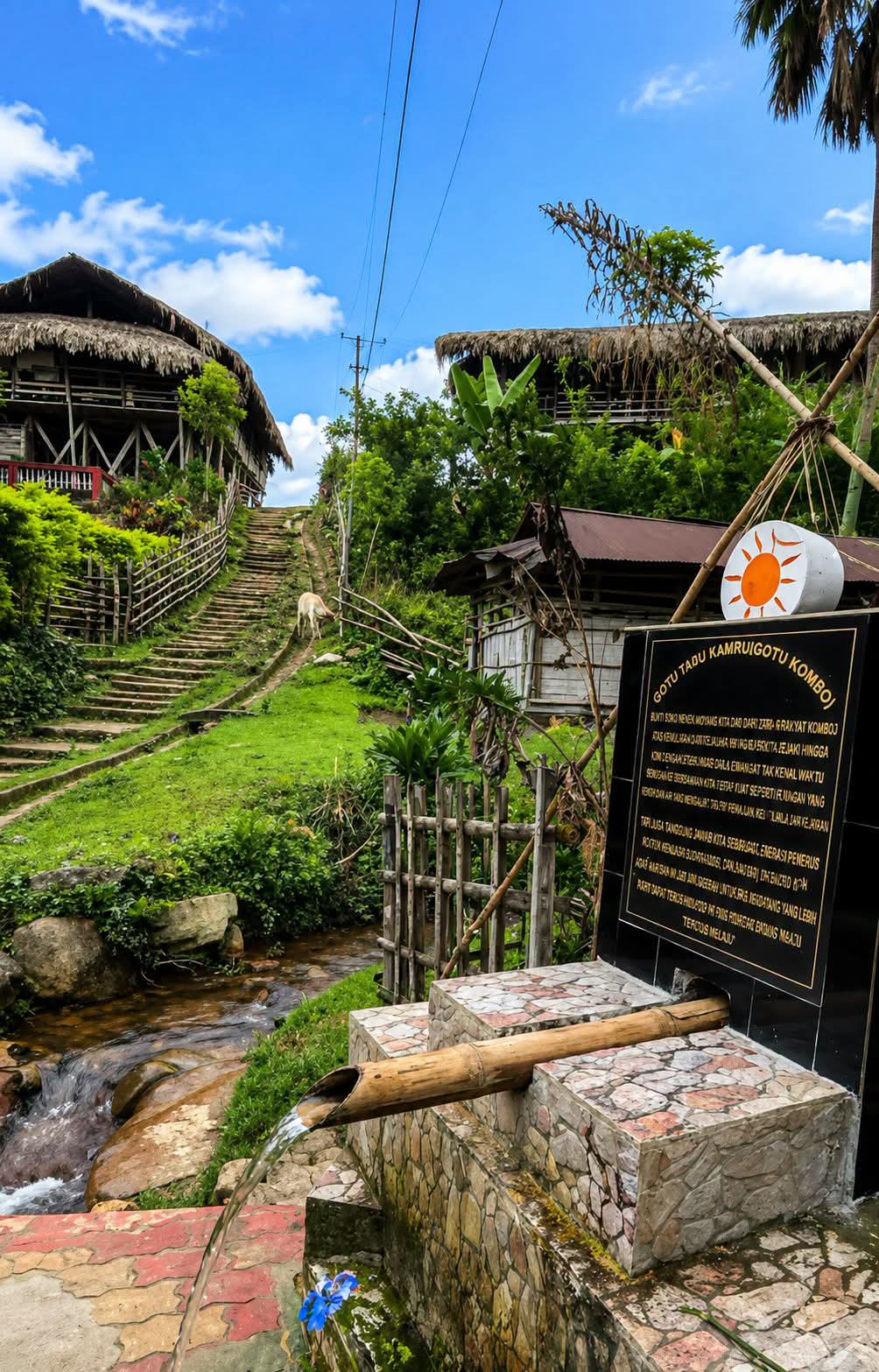
Indigenous cultural heritage and community gathering in the Tani heartland of Arunachal Pradesh.
3. The Oral Tradition & Nyibu Chants
For centuries, the Tani languages existed primarily as spoken and performed media. Complex genealogies, medicinal knowledge, astronomical calendars, and philosophical epics were memorized and recited by traditional shamans (Nyibu or Miri) in an elevated, archaic register known as Nyibu Agom.
This poetic register utilizes dense metaphor, rhythmic couplets, and obsolete lexical roots that differ substantially from colloquial everyday speech. Because this register is mastered primarily by aging elders, the risk of lexical loss is severe unless proactive digital transcription and phonetic modeling are undertaken immediately.
4. Linguistic Characteristics of Tani Dialects
From a computational linguistics and natural language processing (NLP) standpoint, the Tani language family presents fascinating structural attributes:
- Agglutinative Morphology: Words are formed by stringing together distinct morphemes to indicate grammatical tense, aspect, evidentiality, and modality.
- Tonal Contrast: Pitch contours differentiate lexical meaning in several varieties (such as Galo and Tagin), requiring high-fidelity audio acoustic models (ASR) to accurately parse.
- Extensive Evidentiality Systems: Tani verbs often encode whether the speaker directly witnessed an event, heard about it second-hand, or inferred it from physical clues.
Key Digitization Challenge
Traditional Roman scripts and Devanagari transliterations often struggle to capture unique vowels (such as the high central unrounded vowel ɨ / ï and open-mid vowels) and phonemic glottal stops. AI4Arunachal is developing standardized phonetic representations paired with high-sampling audio datasets to overcome this barrier.
5. The Urgency of Digital Preservation & AI4Arunachal's Mission
As globalization and urbanization accelerate, youth in tribal areas increasingly communicate in Hindi and English. While multilingualism is an asset, native mother tongues risk fading into informal domestic use or extinction.
Through the Tanyi (Tani) Dialects Digitization Project, AI4Arunachal is building the computational infrastructure needed to bring these languages into the AI era:
- Crowdsourced Oral Corpora: Collecting thousands of hours of high-quality, verified audio recordings across native speakers of all age brackets and valleys.
- Automatic Speech Recognition (ASR): Developing neural acoustic engines capable of converting live spoken Tani dialects into accurate text.
- Parallel Translation Models: Training neural machine translation (NMT) architectures between English, Hindi, and Tani varieties to empower education, governance, and cultural archives.
By bridging the gap between ancient indigenous knowledge and cutting-edge artificial intelligence, we ensure that the voices of Arunachal Pradesh are preserved, celebrated, and empowered for generations to come.